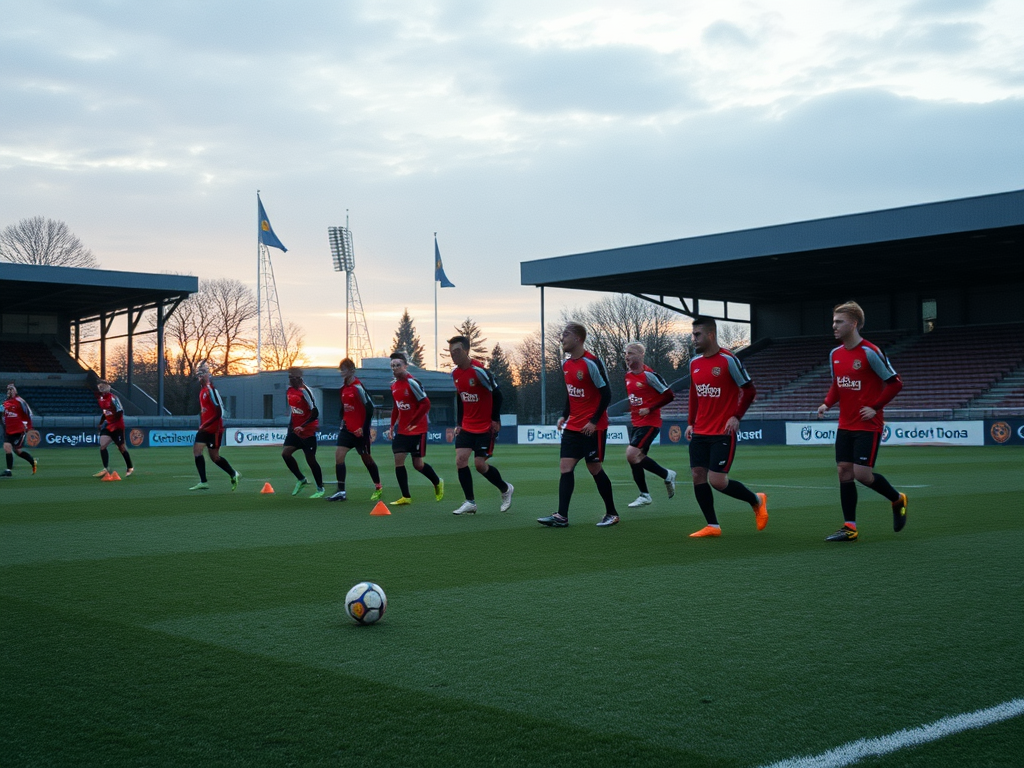
 Swindon Town Hub
Enhancing Swindon Town's Midfield Dynamics for Improved Performance
Swindon Town has displayed moments of brilliance in their recent matches, yet the tactical setup, particularly in midfield, could benefit from some fine-tuning. Currently, the Robins have a solid base in their defensive shape, but as they aim to solidify their position in League Two, adjustments in midfield dynamics could unlock the team's attacking potential while ensuring defensive stability.
Midfield Structure: Current Observations
In recent games, Swindon's midfield has often appeared congested when transitioning from defense to attack. With three central midfielders frequently deployed, the team's shape tends to become too rigid, leading to a lack of fluidity in moving the ball forward. Opponents have capitalized on this predictability, pressing high and forcing turnovers that have resulted in counter-attacks.
One notable pattern has been the reliance on long balls to the strikers, which, while effective at times, often bypasses the midfield entirely. This can result in a disconnect between the defense and the attack, making it difficult for Swindon to sustain prolonged periods of possession. Moreover, the attacking midfielders have had limited space to operate due to the close proximity of the central midfielders, stifling creativity and movement.
Suggested Tactical Adjustments
To enhance Swindon's midfield dynamics, a few strategic tweaks can be implemented: 1. Adopt a Double Pivot: Transitioning to a double pivot in midfield could provide a more balanced approach, allowing one player to sit deep and distribute while the other engages in forward movements. This structure can help in maintaining possession and facilitating quicker transitions.
2. Encourage Wing Play: By utilizing the width of the pitch, Swindon can stretch the opposition's defense. Wingers should be encouraged to stay wide, creating space for overlapping full-backs and allowing central midfielders to exploit the gaps left by the opposition.
3. Fluidity and Rotation: Encouraging fluidity among the midfielders can create confusion for opposing defenses. By allowing players to interchange positions, the Robins can disrupt defensive lines and create mismatches, particularly against teams that set up in a rigid shape.
4. Incorporate a Playmaker: If there is a suitable candidate within the squad, introducing a more advanced playmaker could enhance creativity in the final third. This player could act as a link between the midfield and the forwards, adding depth to Swindon’s attacking options.
Conclusion
The current form of Swindon Town reflects the potential within the squad, but optimizing the midfield structure is crucial for achieving greater consistency and success in League Two. By making these tactical adjustments, the Robins could not only improve their performance but also enhance the overall matchday experience for fans at The County Ground. With the right tweaks, Swindon can harness its strengths and challenge opponents more effectively, allowing the team to climb the league standings and make a serious push for promotion.