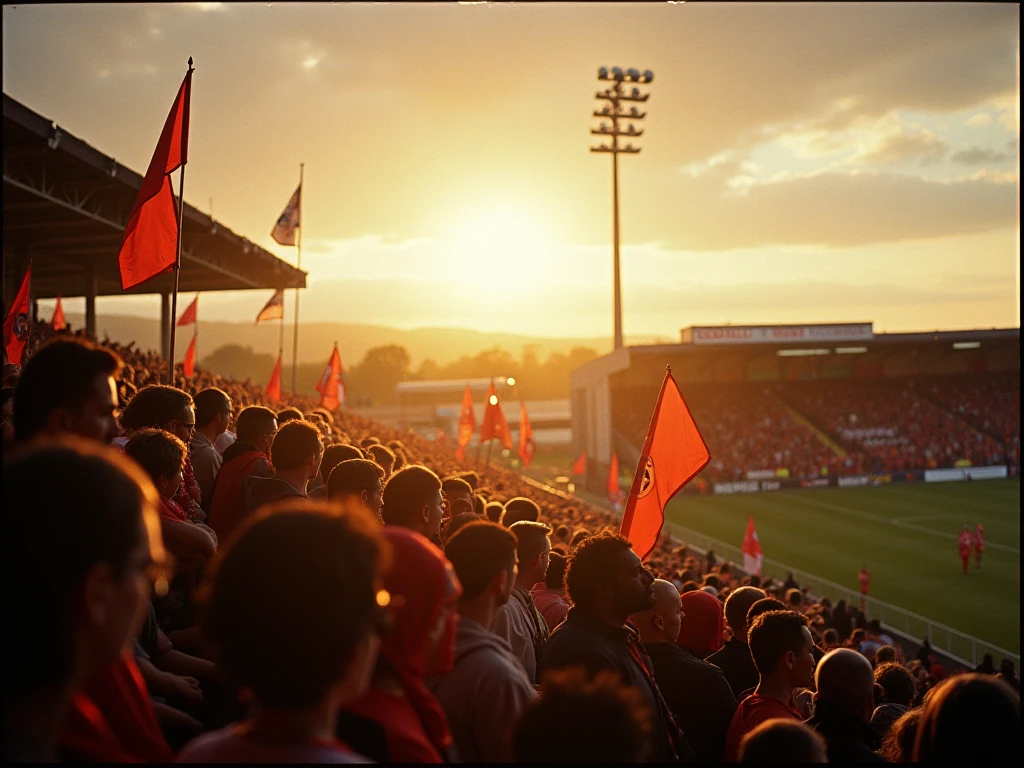

The roar of the County Ground faithful reverberating through Wiltshire, the sight of the Robins battling in League One, it's a dream that ignites every Swindon Town supporter's heart each season. Yet, beyond the elation of promotion lies a complex financial landscape, a delicate balance where ambition meets fiscal reality.
The perennial quest for promotion from League Two often feels like a gladiatorial struggle, a relentless pursuit where every point, every goal, and every clean sheet inches us closer to the promised land. For the Red Army, the thought of seeing our beloved Robins ascend to League One isn't just about climbing a division; it’s about renewed hope, a higher standard of football, and the thrilling prospect of testing our mettle against bigger clubs. It’s the very fuel that fires the passion on the terraces, driving season ticket sales and filling the turnstiles weekend after weekend. The current campaign, much like many before it, has been a rollercoaster of emotions, demonstrating both the potential and the pitfalls of life in the fourth tier. Each victory builds momentum, each defeat a sobering reminder of the fierce competition. As the playoff spots or automatic promotion places loom larger on the horizon, the conversation shifts from mere on-field performance to the deeper implications, particularly regarding the club's long-term sustainability and growth. What exactly would that step up mean for Swindon Town, not just on the pitch, but crucially, in the boardroom and, ultimately, for the very fabric of our community club?
The most immediate and tangible benefit of promotion to League One is undoubtedly the substantial uplift in revenue streams. As former Swindon Town chairman Andrew Black once highlighted in his observations on the club’s financial health, moving up a division brings a significant increase in the solidarity payments and broadcasting revenue distributed by the EFL. While these figures might not rival the astronomical sums seen in the Premier League, for clubs operating in the lower tiers, they represent a crucial injection of cash, often equating to a seven-figure sum that can transform a budget. Beyond these central funds, the step up also tends to generate a natural surge in matchday income. Playing against more attractive opponents, coupled with the enhanced profile of the club, typically leads to higher attendances at The County Ground. More bums on seats mean more tickets sold, greater expenditure at concession stands, and increased merchandise sales - all vital arteries feeding the club’s coffers. Furthermore, League One status often makes the club a more appealing proposition for local and national sponsors, potentially unlocking more lucrative commercial deals that further bolster the financial foundations. This increased visibility and perceived prestige can draw in new partners eager to align themselves with a club on an upward trajectory, providing invaluable support for everything from kit sponsorship to advertising hoardings.
However, the financial landscape of League One is far from a one-way street of endless bounty. With increased income comes an inevitable escalation in expenditure, a reality that astute club management must navigate with precision. The most significant jump typically comes in the wage bill. To compete effectively in the higher division, the squad invariably requires an upgrade in quality, attracting players who command higher salaries than those typically found in League Two. Retaining key talent from the promotion-winning squad also often necessitates improved contracts. Beyond player wages, operational costs also rise. Travel expenses for away matches become more substantial, covering longer distances and sometimes requiring overnight stays. Stadium maintenance and upgrades, necessary to meet higher league standards and accommodate increased crowds, also represent a considerable outgoing. Investing in the youth academy and development squads, crucial for long-term sustainability and producing home-grown talent, also requires continuous funding. Navigating this delicate balance between ambitious investment and prudent spending is where clubs often succeed or stumble. Without careful financial planning, the dream of League One football can quickly turn into a nightmare of mounting debts, a fate that has unfortunately befallen many clubs who overstretched themselves in pursuit of glory.
This brings us to a crucial strategic point often discussed when evaluating promotion prospects: the idea that League One can represent a "sweet spot" for clubs like Swindon Town. As Andrew Black hinted, while Championship football offers even greater financial rewards, it also brings a massive increase in costs and competition, with many clubs risking significant debt in pursuit of the Premier League lottery. League One, by contrast, provides a stable, competitive platform without the same level of existential financial pressure. It allows a club to operate on a more sustainable budget, attract better quality players, and develop a stronger infrastructure, all while maintaining a healthy financial footing. It’s a division where shrewd recruitment, intelligent tactical approaches, and robust financial management can genuinely lead to success, rather than simply being outspent by bigger fish. The opportunity to build a solid foundation, consolidate our position, and then plan for future assaults on the Championship becomes a realistic ambition, rather than a desperate gamble. This period in League One is not just about avoiding relegation; it’s about laying the groundwork for sustained growth, nurturing talent, and progressively building a team capable of reaching even higher echelons without jeopardizing the club's future.
Beyond the spreadsheets and balance sheets, the impact of League One promotion on the club's identity and its loyal fanbase cannot be overstated. The Red Army thrives on success and ambition. A higher league status invariably translates to a more exciting product on the pitch, with improved technical quality and more captivating encounters. This invigorates the support, drawing in new generations of fans and strengthening the bond between the club and the community. Local businesses benefit from increased footfall on matchdays, and the town itself enjoys a heightened profile. Furthermore, the ability to attract superior playing talent not only improves the first team but also elevates the aspirations of the youth academy prospects, providing clear pathways for their development. It’s a virtuous cycle: success on the pitch generates financial health, which in turn allows for further investment in the squad and facilities, leading to more success and greater fan engagement. The pride of seeing our Robins compete at a higher level, showcasing our talent and battling for points across the country, is a sentiment that unites us all and forms the very essence of what it means to be a Swindon Town supporter.
As the current season hurtles towards its thrilling conclusion, with every kick and tackle holding immense significance, the dream of League One football burns brightly. The path ahead is fraught with challenges, demanding unwavering commitment from every player, staff member, and indeed, every fan in the stands. Should Swindon Town achieve that coveted promotion, the real work, both on and off the pitch, will truly begin. It will be a testament to collective effort, intelligent planning, and a deep understanding that while immediate success is exhilarating, long-term stability and sustainable growth are paramount. The financial realities, as highlighted by figures like Andrew Black, underscore that promotion is not merely an endpoint, but a new beginning - an opportunity for the Robins to build a stronger, more resilient club ready to face the future, whatever division it may bring.